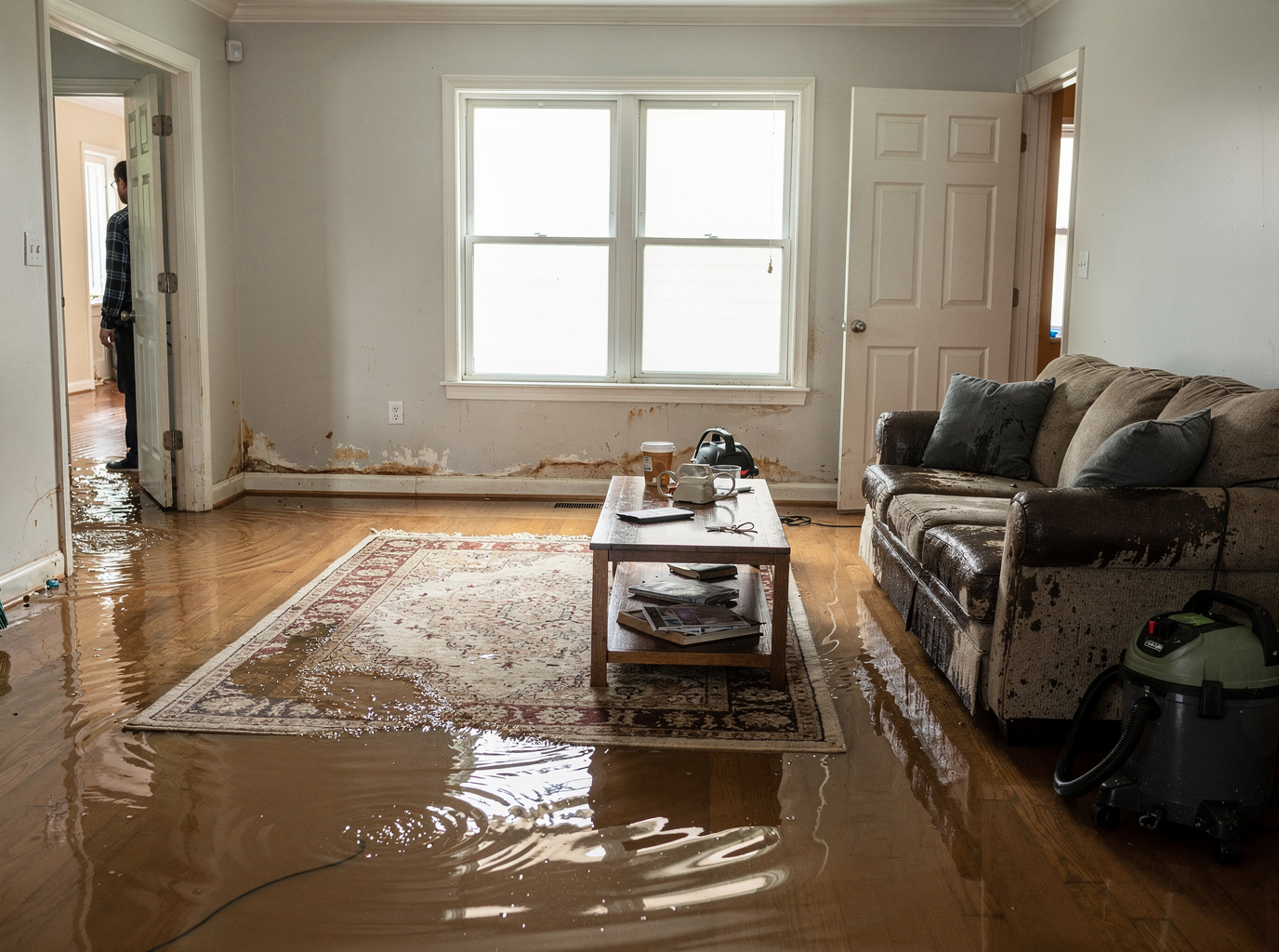
Flood cleanup addresses standing water and saturation that enters homes through heavy rainfall common in Raleigh's humid subtropical climate. Independent providers may extract water, remove affected materials, and use drying equipment to reduce moisture levels in structures. In Wake County, older housing stock in neighborhoods such as Oakwood and Boylan Heights often features crawlspaces and basements that trap water, while areas near Falls of Neuse see runoff challenges during summer storms.
Common causes include roof leaks, overwhelmed drainage systems, and appliance failures, with warning signs like musty odors or buckling floors appearing quickly in high-humidity conditions. A local restoration professional may assess contamination risks from sewage backups or outdoor flooding and determine whether demolition of drywall or flooring is needed. Safety concerns arise when electrical systems are exposed or mold growth accelerates due to mild winters that rarely freeze out spores.
Homeowners should consider how nearby cities like Cary and Durham share similar soil and storm patterns that influence water movement across properties. Insurance coverage depends on the specific policy and documented cause of loss, so verifying details with the insurer remains important. Raleigh Water Damage Help connects consumers with independent local service providers who handle evaluation and any agreed work.
Technician insight
In Raleigh, the thing that catches most people out with Flood Cleanup is how the humid subtropical summers keep crawlspaces and basements damp for weeks after the rain stops, especially in pre-1950 homes around Oakwood and Hayes Barton where poor grading funnels water toward foundations.
Summer storm flooding near Pullen Park
Heavy rain overwhelmed drainage around a Cameron Village home, sending water into the basement. The provider found saturated carpet and drywall plus elevated moisture in framing. Extraction and drying equipment were used, followed by material removal to limit mold risk.
Flood Cleanup Services We Offer
✓Emergency Water Extraction
A local restoration professional may remove standing water from flooded areas using pumps and vacuums to limit further saturation in Raleigh homes.
✓Structural Drying
An independent provider may set up air movers and monitor moisture levels in walls, floors, and ceilings after flood events in neighborhoods like Glenwood South.
✓Dehumidification
A restoration company may deploy dehumidifiers to lower humidity in affected spaces, helping prevent mold in Raleigh's humid summers.
✓Sewage & Contaminated Water Cleanup
An independent provider may handle cleanup of floodwater containing contaminants, including removal and disposal of affected materials.
✓Basement Water Removal
A local professional may extract water from basements common in older Wake County homes and address drainage issues around properties in Mordecai.
✓Ceiling & Wall Water Damage
An independent provider may inspect and remove saturated drywall or insulation following roof or upper-floor leaks during Raleigh storms.
How it works
- 1
Request Connection
Homeowners contact Raleigh Water Damage Help to request help connecting with a local provider.
- 2
Provider Match
The service connects the caller with an independent local provider subject to availability.
- 3
On-Site Evaluation
The provider evaluates the flooded area and discusses findings with the homeowner.
- 4
Scope and Terms
The provider determines the work scope, pricing, and scheduling based on site conditions.
- 5
Work Performance
The provider carries out any services agreed upon with the homeowner.
Pricing
Pricing depends on water volume, affected materials such as hardwood or drywall, extent of saturation, demolition needs, drying duration, and any contamination. Raleigh Water Damage Help does not set prices; the independent provider determines actual costs after evaluating the property.